

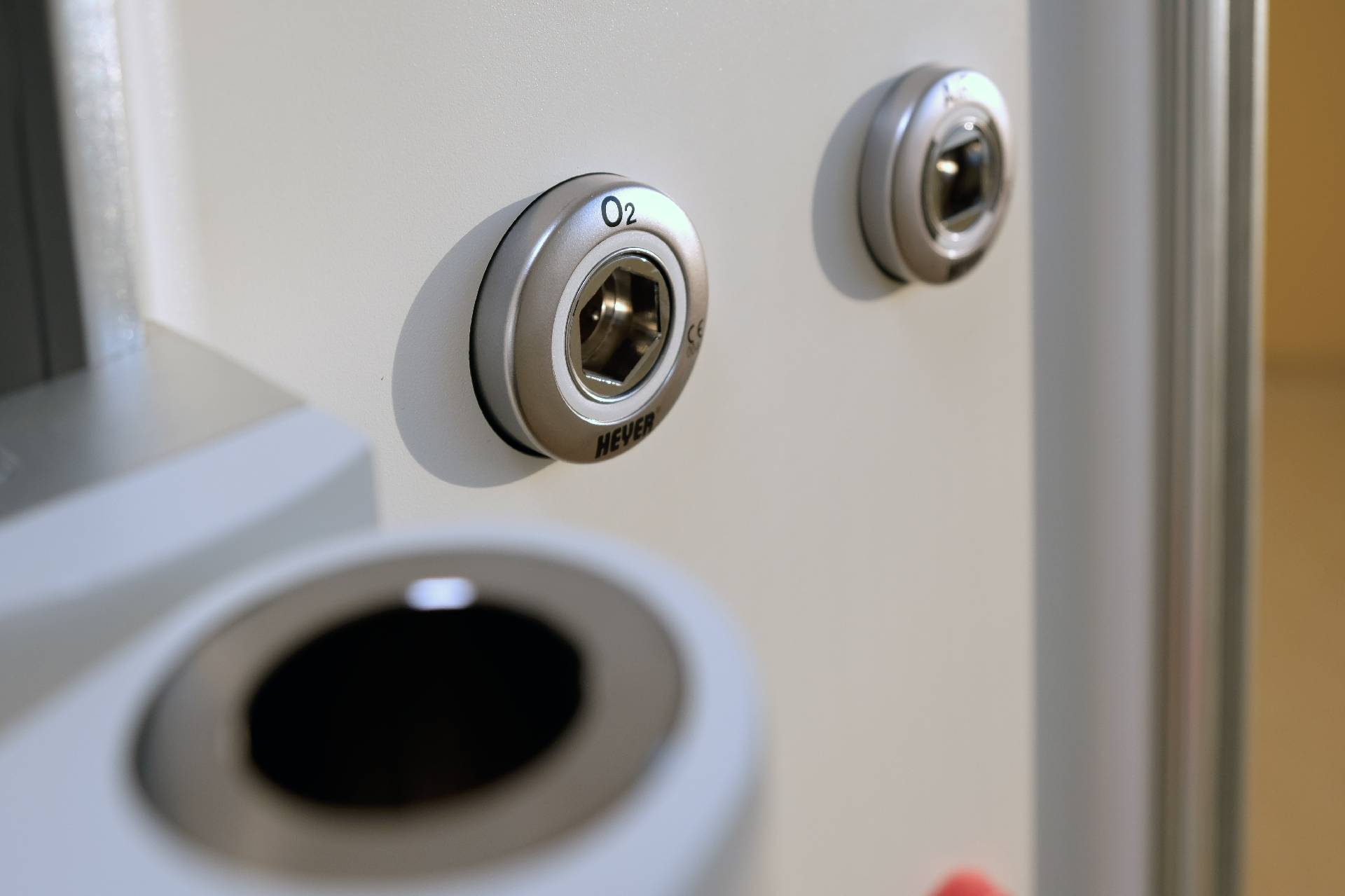
When we think of the technological infrastructure of a modern hospital, our minds often turn to medical imaging, robotic surgery, or advanced operating theatres. Much less visible, yet equally essential, are the medical gas systems that support patient care every single day.
Behind every operating room, intensive care unit, emergency department, consultation room, and patient ward lies an extensive network of pipelines, valves, alarm systems, and outlets that safely distribute medical gases where they are needed. Oxygen, medical compressed air, vacuum, nitrous oxide, and carbon dioxide are now considered critical utilities in healthcare environments. Their availability must be guaranteed at all times.
More than just pipework
Medical gas systems are often perceived as little more than a network of copper pipes. In reality, they form a complex infrastructure in which design, material selection, validation, alarm management, maintenance, and documentation are closely interconnected.
Any interruption in supply, contamination, or incorrect connection can have immediate consequences for medical procedures and healthcare operations. Reliability therefore starts long before a system is commissioned.
The international standard ISO 7396-1 serves as the reference framework for medical gas pipeline systems. It defines how installations must be designed, constructed, tested, and maintained to ensure the highest possible level of operational reliability.
Compliance is becoming a strategic priority
With the continued implementation of the Medical Device Regulation (MDR) towards the end of 2027, quality management is becoming increasingly important across the healthcare infrastructure sector.
Traceability, document management, risk analysis, competence management, and vigilance are no longer viewed as administrative obligations. They have become essential elements of quality assurance.
In this context, ISO 13485 provides a valuable framework for organisations active in medical technology and medical infrastructure.
Recently, EEG Medical successfully completed a TÜV audit covering its medical gas activities. The audit evaluated not only procedures and quality documentation, but also their practical application in a real project environment. Design, installation, validation, maintenance, documentation, traceability, risk analysis, and vigilance all formed part of the assessment.
Technical challenges continue to grow
Healthcare environments are becoming increasingly complex.
Modern operating theatres and intensive care units contain a growing concentration of technical installations. Medical gas systems must be integrated alongside electrical installations, HVAC systems, medical equipment, digital imaging solutions, and communication technologies, often within very limited technical spaces.
Many projects are also carried out in fully operational hospitals. Renovation work must often take place while patient care continues uninterrupted. This requires meticulous planning, comprehensive risk assessments, and close coordination with technical departments, healthcare professionals, and construction partners.
At the same time, integrating existing infrastructure with new technologies is becoming more challenging, while clients rightfully demand higher standards for quality, documentation, and sustainability.
Craftsmanship remains essential
Technology alone does not guarantee quality. Ultimately, quality is delivered by people.
For that reason, EEG Medical relies exclusively on its own specialised employees. Today, 28 technicians hold the required certifications for brazing medical gas pipelines. These certifications are issued by Apragaz, a member of BELAC, and remain valid for five years.
What makes this approach particularly valuable is the direct interaction between our technicians, clients, technical directors, and project teams. Their experience enables them to develop practical solutions for complex situations on site and to communicate effectively with all stakeholders involved.
Quality is verified every day
In medical gas installations, quality extends far beyond procedures and certificates.
All installations are pressure-tested at 1.5 times their operating pressure. Our technicians perform these tests themselves and inspect their own work for potential leaks before a system is certified and put into service.
We also continuously invest in training and knowledge sharing. During our annual St. Eligius gathering, dedicated training sessions are organised on topics such as changes in standards, medical gas alarm systems, RF seals, safety, first aid, and firefighting.
This ongoing commitment ensures that expertise, experience, and quality awareness continue to grow throughout the organisation.
An invisible yet indispensable infrastructure
Patients rarely see medical gas systems. Surgeons seldom think about them. And perhaps that is the greatest compliment such an infrastructure can receive.
When medical gases are available exactly where and when they are needed, it is a sign that design, installation, validation, maintenance, and quality assurance have been carried out correctly.
The reliability of medical gas systems is never accidental. It is the result of specialised expertise, continuous training, and the consistent application of international standards. Ensuring that reliability remains one of the most important responsibilities within our sector today.